

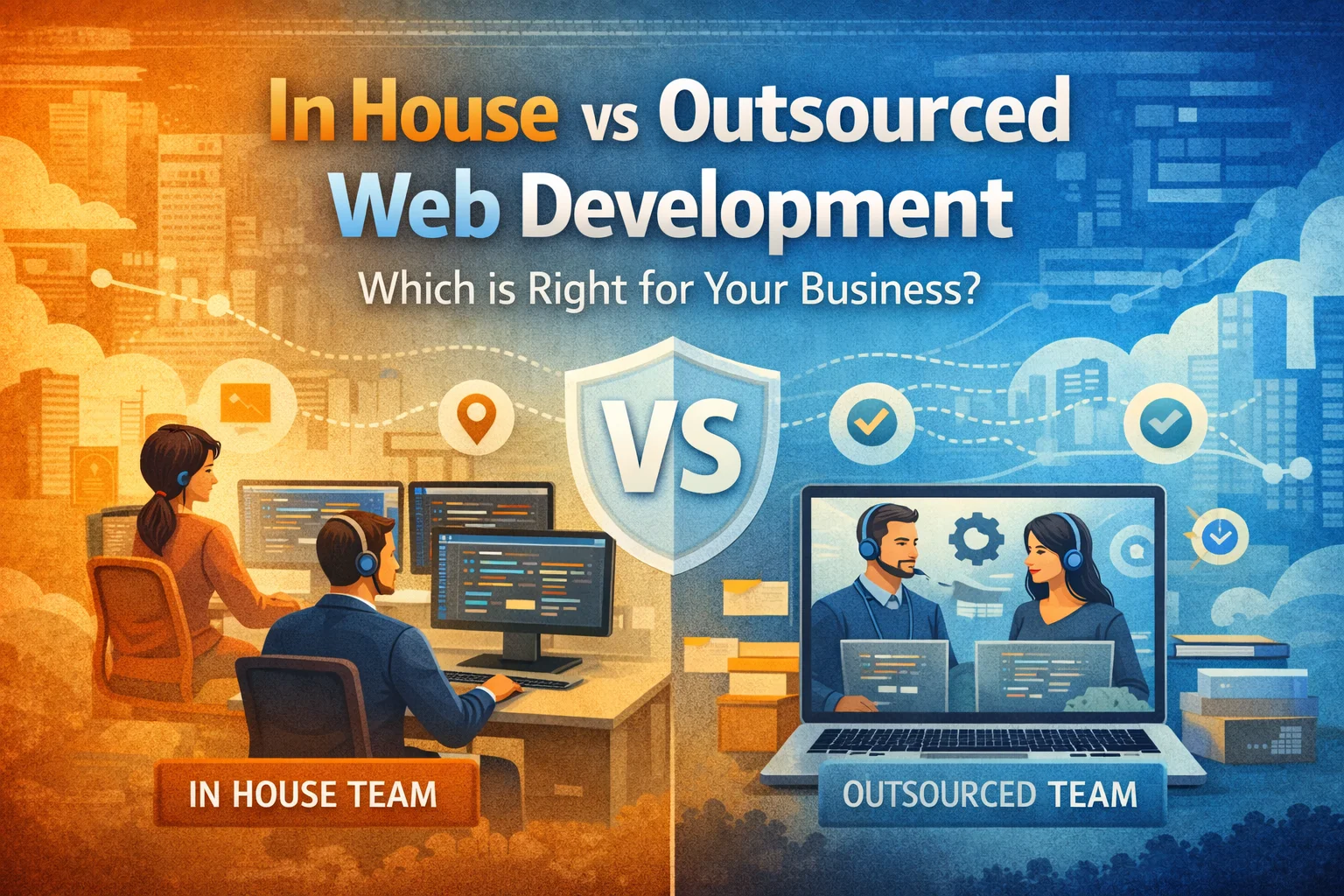
Building and maintaining a website is no longer optional. It is a core part of business growth. Yet many companies struggle with rising development costs, missed deadlines, and the constant challenge of finding and managing skilled developers.
You may have experienced this yourself. Hiring an in house development team takes months. Salaries, benefits, tools, and training increase overhead. Projects move slowly because your team is overloaded. Or worse, you launch late and lose market opportunities.
This is why many startups and growing businesses choose to outsource web development.
Outsourcing gives you access to experienced professionals, reduces operational pressure, and helps you launch faster without building a full internal tech department.
Before we go deeper, here is a quick overview to help you understand how outsourcing compares to managing development in house:
Now let’s explore everything you need to know about outsourcing web development the right way.
| Factor | In House Development | Outsourced Web Development |
| Cost Structure | Fixed salaries and overhead | Flexible project based cost |
| Hiring Time | Long recruitment cycle | Immediate access to team |
| Expertise | Limited to hired staff | Wide range of specialists |
| Scalability | Slow to scale | Easy to scale up or down |
| Management | Direct supervision required | Managed by external team |
| Risk | High fixed investment | Lower operational risk |
What Is Web Development Outsourcing
Web development outsourcing is the process of hiring an external company or team to design, develop, and maintain your website or web application.
Instead of building an internal development department, you partner with a web development agency or remote team that handles technical execution. They may work on:
- Corporate websites
- Ecommerce platforms
- Custom web applications
- SaaS platforms
- Landing pages and marketing sites
- Website maintenance and upgrades
Outsourcing can be local, nearshore, or offshore depending on your budget and preferences.
If you are already exploring options like custom website development services or ecommerce development services, outsourcing allows you to access these capabilities without hiring internally.
Why Businesses Choose to Outsource Web Development
Business owners choose outsourcing for practical reasons. It is not only about cost savings. It is about efficiency and strategic growth.
Here are the most common reasons companies outsource web development:
- Lack of in house technical expertise
- Limited budget for full time developers
- Urgent project timelines
- Need for specialized skills such as React, Laravel, or Shopify
- Focus on core business operations
- Difficulty managing technical teams
For startups, outsourcing reduces risk. For established companies, it increases flexibility.
Benefits of Outsourcing Web Development
1. Cost Efficiency
Hiring in house developers involves salaries, benefits, office space, equipment, training, and management overhead.
Outsourcing converts fixed costs into variable costs. You pay for the project or dedicated resources only when needed.
You avoid long term financial commitments while still accessing professional expertise. This makes outsourcing ideal for startups and growing businesses managing tight budgets.
2. Access to Skilled Developers
Finding experienced developers can take months. Even after hiring, your team may lack certain skills.
Outsourcing gives you access to specialists across different technologies such as:
- Front end development
- Back end development
- UI and UX design
- Ecommerce platforms
- CMS systems
- API integration
You can build a complete team without recruiting each role individually.
3. Faster Time to Market
Speed matters in competitive industries.
Experienced outsourcing agencies follow proven development processes. They have established workflows, tools, and teams ready to start immediately.
This allows you to launch products faster, test ideas quickly, and respond to market changes without delay.
4. Scalability and Flexibility
Business needs change. You may require five developers today and two next month.
Outsourcing allows you to scale your development team up or down based on project demands. This flexibility supports growth without long term staffing risks.
Risks and Challenges of Outsourcing
Outsourcing offers many benefits, but it also comes with challenges.
Understanding these risks helps you manage them effectively:
- Communication gaps
- Time zone differences
- Quality concerns
- Security risks
- Hidden costs
- Misaligned expectations
The solution is not to avoid outsourcing. The solution is to choose the right partner and establish clear processes.
How to Choose the Right Web Development Company
Selecting the right outsourcing partner is the most important step in the process.
Here is what you should evaluate:
1. Portfolio and Case Studies
Review previous projects. Look for experience in your industry or similar project types.
Do they build ecommerce websites? SaaS platforms? Corporate websites?
Check performance, design quality, and technical complexity.
2. Technical Expertise
Ensure they work with modern technologies and frameworks relevant to your project.
Ask about:
- Programming languages
- CMS platforms
- Security practices
- Hosting and deployment processes
3. Communication Process
Clear communication determines project success.
Ask how they manage projects, share updates, and handle feedback. Tools like Slack, Trello, Asana, or Jira are commonly used.
4. Client Reviews and Reputation
Look at testimonials, Google reviews, and LinkedIn feedback.
Consistent positive feedback indicates reliability.
5. Transparency in Pricing
Avoid vague pricing models. Request a detailed proposal with clear deliverables and milestones.

Step by Step Process to Outsource Web Development Successfully
Step 1: Define Project Scope
Clarity reduces confusion and cost overruns.
Document:
- Project goals
- Target audience
- Required features
- Design preferences
- Competitor references
- Technical requirements
The clearer your scope, the more accurate the proposal.
Step 2: Set Budget and Timeline
Define a realistic budget range.
Avoid choosing the cheapest option. Low cost often leads to poor quality and rework.
Set milestone based timelines with clear deliverables.
Step 3: Evaluate Portfolios and Experience
Shortlist agencies and request proposals.
Ask for similar case studies and speak to previous clients if possible.
This step reduces risk significantly.
Step 4: Communication and Project Management
Agree on:
- Weekly or bi weekly meetings
- Progress reporting format
- Approval processes
- Change request handling
Strong project management keeps everything on track.
Step 5: Contracts and Security Considerations
Always sign a formal contract.
Include:
- Scope of work
- Payment terms
- Confidentiality agreements
- Intellectual property ownership
- Data protection terms
Make sure you retain full ownership of your website and source code.
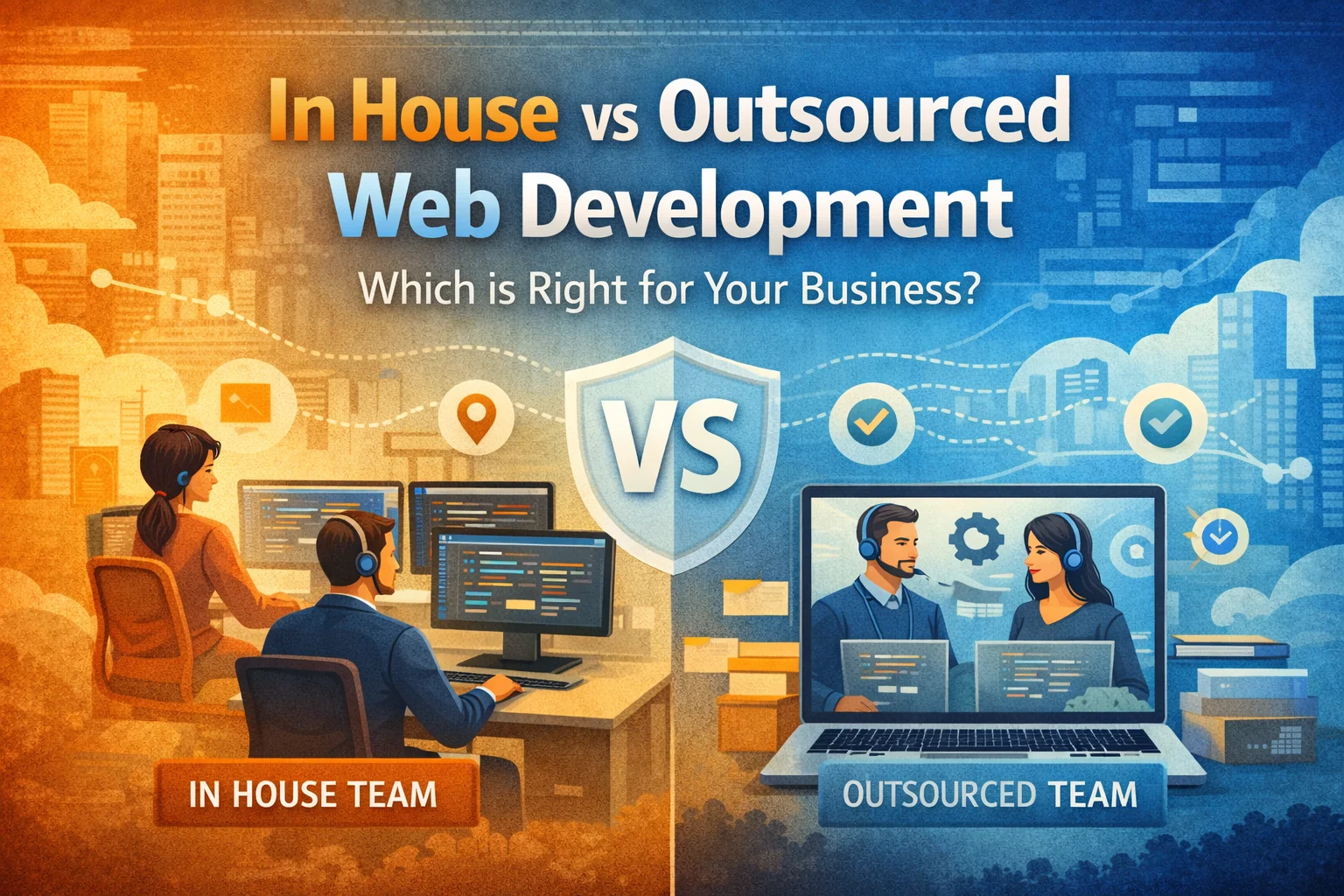
In House vs Outsourced Web Development Comparison
Here is a more detailed comparison to help decision making:
| Criteria | In House Team | Outsourced Team |
| Initial Cost | High recruitment and setup cost | Low upfront cost |
| Ongoing Cost | Fixed monthly salaries | Pay as needed |
| Skill Variety | Limited to internal hires | Access to diverse experts |
| Management Effort | High supervision required | Shared management |
| Scalability | Slow hiring process | Immediate scaling |
| Risk Level | Higher long term commitment | Flexible risk model |
For companies focused on growth and operational efficiency, outsourcing often provides better flexibility.
Common Mistakes to Avoid
Many outsourcing projects fail because of preventable mistakes.
Avoid these common errors:
- Choosing based only on low price
- Providing unclear requirements
- Ignoring communication structure
- Skipping legal agreements
- Micromanaging instead of trusting professionals
- Failing to define performance metrics
Clear planning and realistic expectations improve success rates.
How to Manage an Outsourced Web Development Team
Even when you outsource, leadership still matters.
Here is how to manage your external team effectively:
Set Clear Goals
Define measurable objectives such as:
- Launch date
- Page speed performance
- Conversion rate targets
- Feature completion milestones
Maintain Regular Communication
Schedule consistent meetings.
Encourage open feedback and transparency.
Use Project Management Tools
Track tasks, milestones, and deliverables.
This improves accountability and visibility.
Focus on Results, Not Hours
Evaluate output quality and deadlines instead of monitoring time.
Build Long Term Relationships
If the partnership works well, maintain it.
A reliable development partner becomes an extension of your business.
Conclusion: Is Outsourcing Web Development Right for You
Outsourcing web development is not just a cost saving strategy. It is a growth strategy.
When done correctly, it gives you access to expert developers, speeds up your time to market, and allows you to scale without heavy operational burden.
The key is choosing the right partner, defining clear goals, and managing the relationship professionally.
If you are planning to build or upgrade your website, consider partnering with Caspi Marketing for professional web development services aligned with your business goals.
With the right outsourcing partner like Caspi Marketing, you can reduce costs, improve efficiency, and focus on what matters most, growing your business with confidence and clarity.
Frequently Asked Questions
Is outsourcing web development cost effective?
Yes. Outsourcing reduces recruitment, salary, and infrastructure costs. It converts fixed costs into flexible project based expenses.
How do I protect my business data when outsourcing?
Use non disclosure agreements, secure hosting environments, access controls, and detailed contracts that define intellectual property ownership.
How long does outsourced web development take?
It depends on project complexity. A basic website may take four to eight weeks. A custom web application may take several months.
Should startups outsource web development?
Yes. Startups benefit from lower costs, faster execution, and access to experienced developers without building an internal team.
What is the best country to outsource web development?
The best choice depends on budget, communication preferences, and time zone compatibility. Focus more on expertise and process than geography.
Can I outsource website maintenance too?
Yes. Many agencies offer ongoing maintenance, updates, and support packages.